

Have you ever taken time to feel your baby’s skin, to even compare the difference in texture between your skin and theirs? You would notice that theirs feels soft, silky, and delicate. Do you ever wonder as a parent why your baby’s skin reacts so quickly to weather changes, certain clothes, baby products, or even products you wear?
That’s because the way a baby’s skin develops is complex and very different from adult skin. Knowing what makes their skin different helps you make the best decisions when it comes to caring for their skin—especially in choosing products that you’ll use on your little one’s body every day.
Let’s explore why our little one’s skin is unique and also determine what ingredients to avoid, which to look for in baby products, how to handle laundry for your baby, and what clothes to choose for them.
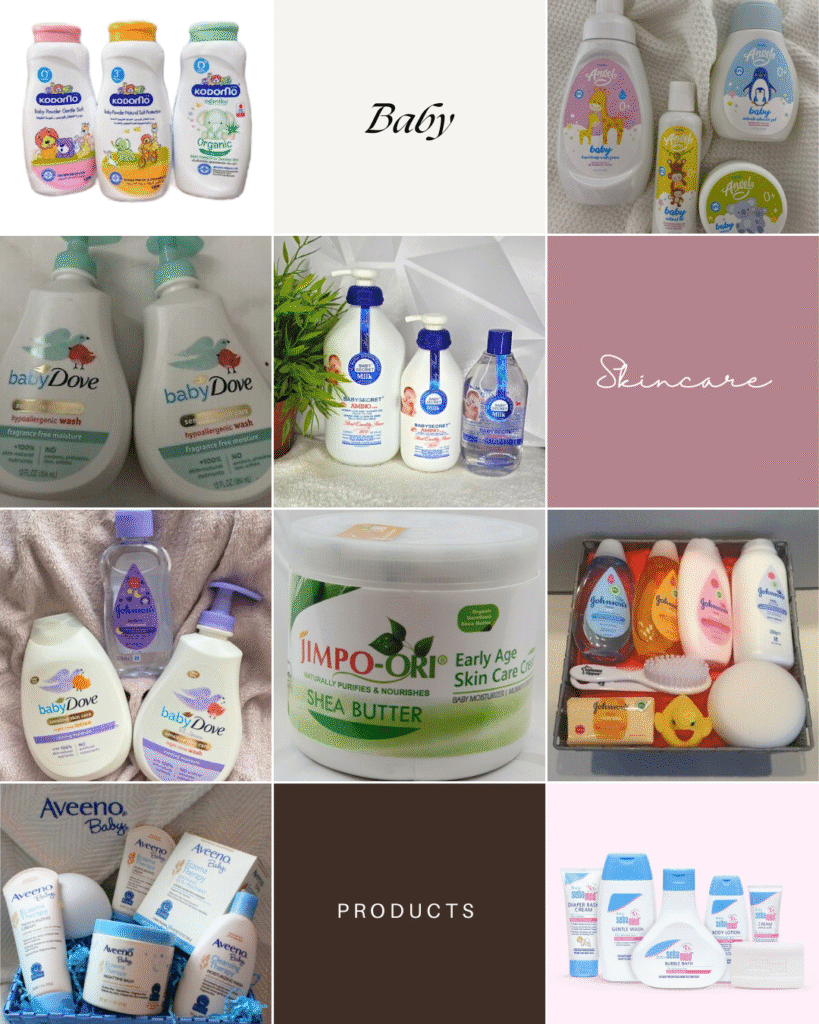
Why Baby Skin is Different
Our skin serves as the protective barrier between us and the external environment. A newborn is still developing their skin barrier, which is why theirs is so sensitive.
- Their skin is thinner than adult skin, so it loses moisture faster and absorbs chemicals more quickly.
- Because their skin barrier is still immature, it struggles to keep irritants out and hydration in.
- Unlike adults with developed oil glands, baby skin has more water content, which causes dryness and flakiness.
- Their blood vessels are closer to the skin surface, which warms them up but also makes them prone to sudden rashes.
- Their protective system (a community of good bacteria) is still developing, making them more prone to infections and irritation.
We need to understand as parents that rashes and acne often happen because our baby’s skin is still learning to adapt to the new environment. Sometimes even with gentle soaps, your baby may still get rashes. Here’s how to spot and manage them in our guide on common baby skin conditions
Safe Products for Baby Skin – Ingredients to Look For
When it comes to baby skincare, less is more. Choose gentle products with fewer ingredients.
Here’s what’s safe and gentle:
- No Smell (Fragrance-Free): Products without perfume are safest.
- Oils from Food: Coconut oil, sunflower oil, or shea butter help keep skin soft.
- Oatmeal (Colloidal Oatmeal): Great for itchy or dry skin.
- Ceramides: Natural fats that protect the skin (look for “ceramide” on the label).
- Mineral Sun Protection: For older babies, choose sunscreens with zinc oxide or titanium dioxide.
Quick tip: If you can eat it (like coconut oil) or it sounds like food (like oatmeal), it’s usually gentler than something with a long, confusing name.
Ingredients to Avoid in Baby Products
Some baby products contain harsh chemicals that can irritate or harm sensitive skin. Watch out for:
- Strong Smells (Fragrances or Perfumes): Too harsh for babies.
- Too Many Chemicals: Long ingredient lists with unpronounceable names.
- Harsh Soap or Foam (Sulfates): Too drying.
- Preservatives That Last “Forever”: Harsh on baby skin.
- Essential Oils: Peppermint, tea tree, eucalyptus, etc.—unsafe for babies.
- Alcohol: Dries out baby skin.
Quick tip: If it smells too strong, foams too much, or has a long list of strange names—skip it. Stick to simple products labeled “fragrance-free” or “for sensitive skin.”
Practical Tips for Choosing Products
- Test them on yourself first or patch-test on a small area of your baby’s skin (behind the ear).
- Stick with one product at a time—don’t overload your baby’s skin.
- If your baby has eczema or sensitive skin, ask a certified pediatrician or pharmacist before using creams.
- Ignore marketing buzzwords like “organic” or “natural”—check the ingredient list instead.
- Remember: Ingredients are listed from the most active to the least active.
Laundry and Clothing Tips
Detergents and fabrics can also cause rashes, so baby laundry and clothing should be safe and skin-friendly.
Choosing the Right Laundry Detergent
- Use mild, gentle detergents—ideally labeled “for babies.”
- Avoid harsh detergents that irritate your hands.
- Rinse clothes thoroughly until water is no longer foamy and detergent smell is gone.
Washing Baby’s Clothes
- Wash baby clothes separately from family laundry.
- Always wash new clothes, especially second-hand ones (okrika), before use.
- Sun-dry clothes and iron afterward to kill insects.
Laundry is just one part of daily care. Don’t miss these essential baby skincare tips that keep your baby comfortable year-round
Picking the Best Fabrics
- Choose soft cotton—breathable and gentle.
- Avoid sequins, wool, lace, Ankara, nylon, and synthetic fabrics.
Dressing Your Baby Comfortably
- Dress in layers (inner pinafore + sleepsuit).
- Avoid tight elastics on trousers or shorts.
- Choose simple, easy-to-wear clothes—skip complicated fashion outfits.
- Change clothes when dirty, sweaty, or wet.
Conclusion
Your baby’s skin is a developing organ that needs extra care and attention. A well-cared-for baby shows it through their skin. By understanding its delicate nature, you can protect it from irritants and keep it healthy, soft, and comfortable.
Choose gentle baby products, safe laundry detergents, and breathable clothing—because your baby’s skin deserves the very best care.
Want to learn more about caring for baby skin? This post is part of our series on baby skin care. For the full guide covering rashes, eczema, products, and more, check out the [The Ultimate Guide to Baby Skin Care] for a complete overview, including daily routines and how to manage common skin conditions like eczema, diaper rash and cradle cap.



Pingback: Common Baby Skin Conditions: How to Identify and Care for Them - The Naija Mom
Pingback: Essential Baby Skincare Tips Every Parent Should Know - The Naija Mom